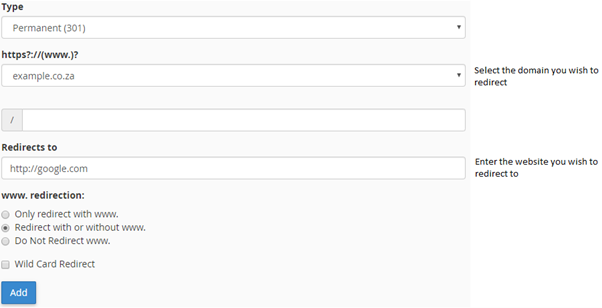
A Redirect allows you to send visitors from one URL or domain to a completely different web address (e.g., automatically forwarding yourdomain.co.za to yourdomain.com, or routing an old page URL to a new one).
Types of Redirects
-
Permanent (301): Tells search engines and browsers that the page has moved permanently. Passes SEO ranking and link equity to the new URL.
-
Temporary (302): Signals that the redirect is short-term (e.g., during site maintenance). Search engines do not update their index to the new address.
Step-by-Step Instructions
-
Log in to cPanel.
-
Scroll to the Domains section and click Redirects.
-
Under Type, choose either Permanent (301) or Temporary (302) from the dropdown menu.
-
Select the domain you wish to redirect from the
http://(www.)dropdown menu (choose All Public Domains or a specific domain). -
(Optional) In the
/path field, enter a specific page or folder to redirect (e.g.,old-page.html). Leave this blank if you want to redirect the entire website. -
In the Redirects to field, enter the full destination URL including
http://orhttps://(e.g.,[https://www.newdomain.com](https://www.newdomain.com)). -
Choose a www. redirection handling option:
-
Only redirect with www. — Only redirects visitors who type
www.in the URL. -
Redirect with or without www. — Redirects all visitors regardless of whether they type
www.or not (Recommended). -
Do Not Redirect www. — Excludes
www.traffic from the redirect rule.
-
-
(Optional) Check Wildcard Redirect if you want to route all subfolders/files to the identical path on the new target domain (e.g.,
[example.com/blog](https://example.com/blog)→[newsite.com/blog](https://newsite.com/blog)). -
Click Add.
Note: cPanel creates these rules by adding entry lines to your website's
.htaccessfile.
If your site uses custom rewrite rules, test the redirect in an Incognito / Private window to ensure there are no redirect loops.